Free Certification Training · Hosted by C&H Electric

NFPA 70E
Electrical Safety
Training.

Get certified. Stay compliant. Protect your workforce. This free, full-day training gives your team the hands-on knowledge to work safely around energized electrical equipment — and meet the NFPA 70E recertification requirement every 3 years.

Free
Certification Training
Every 3 Yrs.
Required Recertification
8AM–4PM
Full Day, On-Site in Waterbury
Nov 12
2026 Training Session

What is NFPA 70E?

The Standard For
Electrical
Safety.

NFPA 70E is the national standard for electrical safety in the workplace. It defines the practices and procedures required to protect employees from arc flash, electrical shock, and other hazards when working on or near energized equipment.

Working near energized equipment poses serious risks — including arc flash, electrical shock, and catastrophic equipment failure. That's why NFPA 70E requires exposed workers to complete this training and recertify at least once every 3 years.

Register Now →
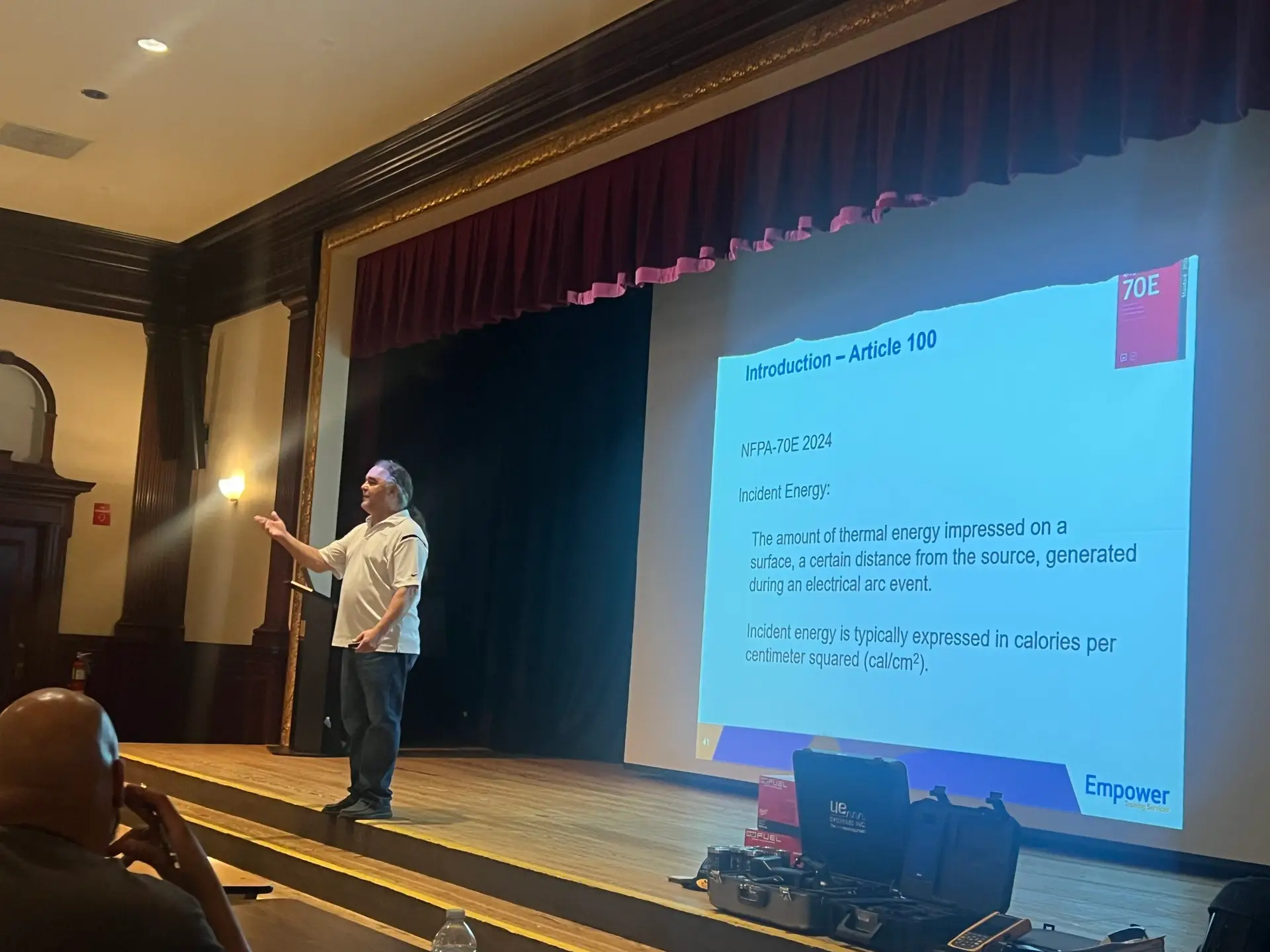
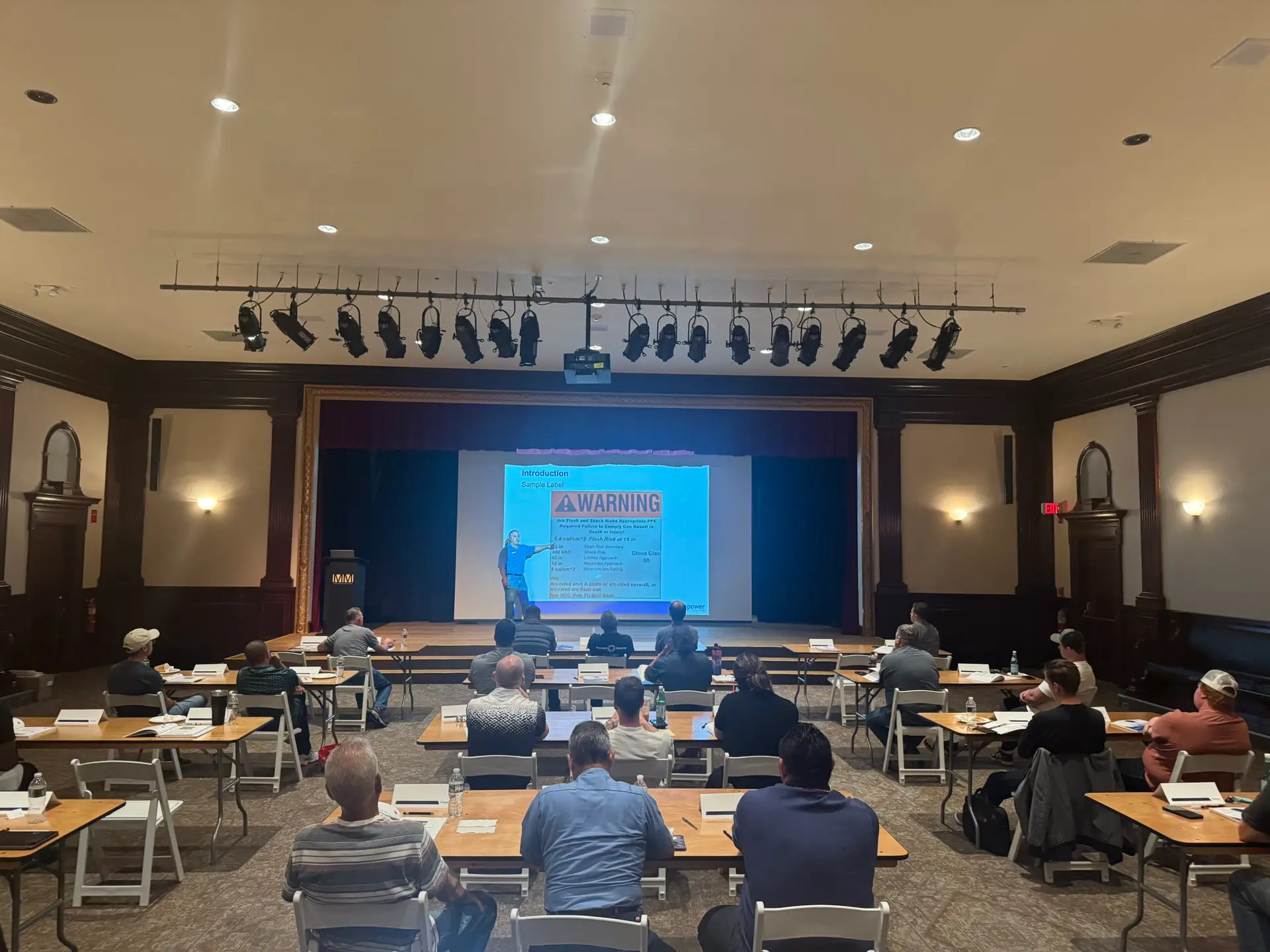
NFPA 70E Electrical Safety Training session
Hosted at the Mattatuck Museum, Waterbury CT

Why This Training Matters

Get Certified.
Stay Compliant.
Stay Safe.

Federal Compliance
Meet the requirements of NFPA 70E (2024) and OSHA 1910 Subpart S — and keep your documentation audit-ready.
Understand the Hazards
Learn exactly how and why arc flash, electrical shock, and equipment failures happen — and how to spot the warning signs.
PPE & Boundaries
Get hands-on guidance on PPE selection and how to correctly establish flash protection boundaries on the job.
Build a Safety Culture
Reduce injuries and reinforce a culture of safety across your entire crew — not just for the workers in the room.
NFPA 70E — 2024 Edition Recertification required at least once every 3 years for exposed workers
OSHA 1910 Subpart S Federal electrical safety compliance requirement
Register Now →

Course Curriculum

What You'll
Learn.

01
NFPA 70E Compliance Overview
A clear walkthrough of what NFPA 70E requires, who it applies to, and how it maps to OSHA 1910 Subpart S.
02
Arc Flash Causes & Prevention
How arc flash incidents happen, the conditions that trigger them, and the steps that prevent them.
03
Flash Protection Boundaries & Safe Distances
How to correctly establish and maintain approach boundaries around energized equipment.
04
PPE Types & Selection
Matching the right personal protective equipment to the hazard, task, and equipment involved.
05
Electrical Maintenance Overview
Best practices for maintaining electrical systems in a way that reduces risk over the long term.

Key Topics Covered

Arc Flash Hazards Shock Protection PPE Selection Flash Boundaries OSHA 1910 Subpart S Risk Assessment Electrical Maintenance
Hands-on NFPA 70E training instruction
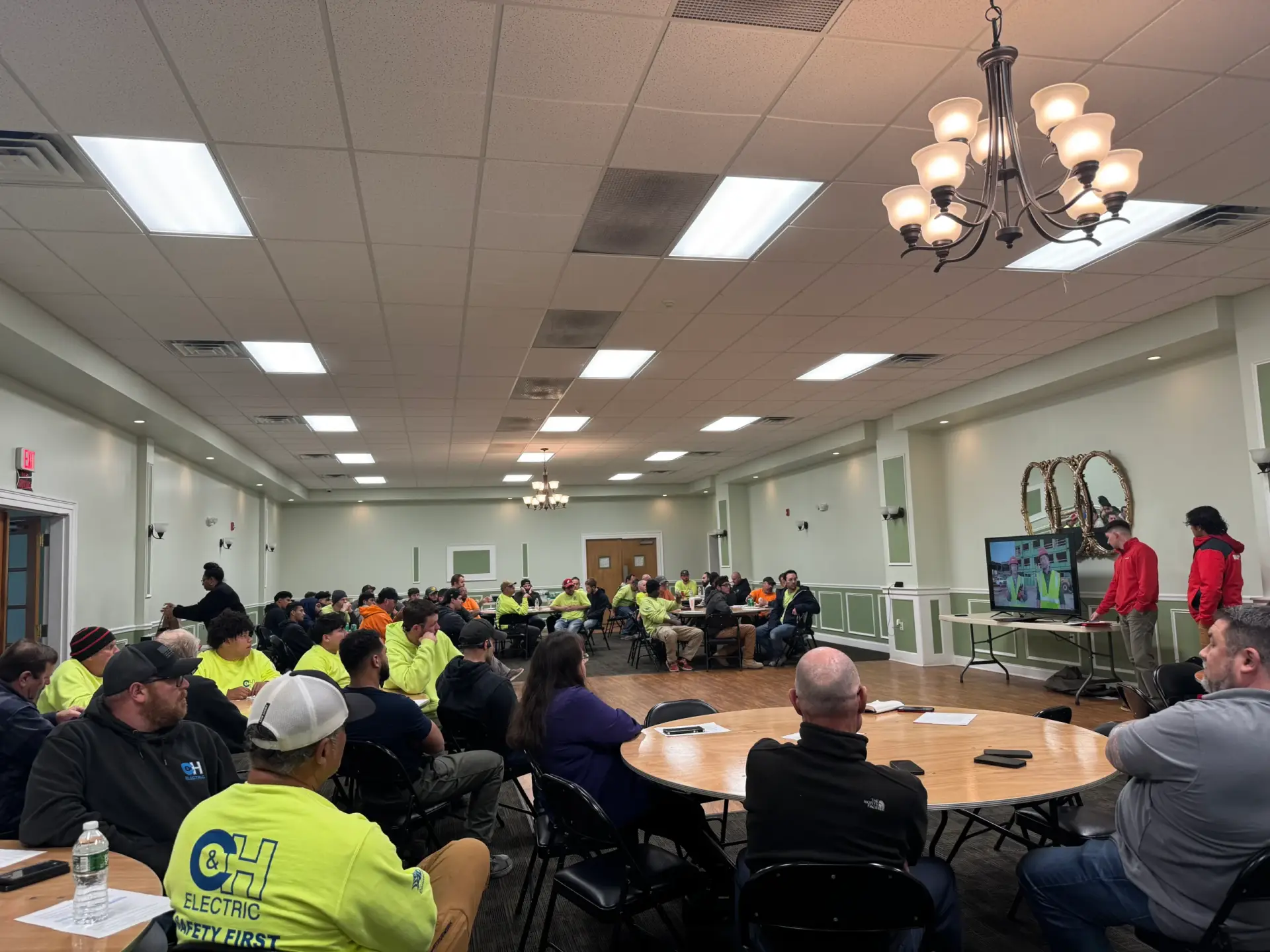
C&H Electric training attendees

What You Get

More Than
A Classroom.

  • Full-day, expert-led training from 8:00 AM to 4:00 PM
  • Printed NFPA 70E training materials to take back to the job site
  • Personalized Certificate of Completion for your records and compliance file
  • Networking opportunities with other Connecticut safety and facilities professionals
  • Lunch and refreshments provided throughout the day
Register Now →

Who Should Attend

Built For Anyone
Who Works
Near Live Equipment.

If your role puts you on, near, or responsible for energized electrical equipment, NFPA 70E requires this training at least once every 3 years — and this session is free to attend.

  • Exposed workers who install, maintain, or troubleshoot energized equipment
  • Required every 3 years to stay compliant with NFPA 70E and OSHA 1910 Subpart S
  • Combines classroom instruction with real-world hazard scenarios
Register Your Team →
Electricians & Technicians
Anyone who installs, maintains, or troubleshoots energized equipment on the job.
Facility & Safety Managers
Responsible for maintaining a compliant, injury-free electrical safety program.
Engineers & EHS Staff
Support risk assessments, PPE programs, and documentation for compliance audits.

Frequently Asked Questions

Got Questions?
We've Got
Answers.

Yes. C&H Electric hosts this NFPA 70E certification training at no cost, including printed materials, your Certificate of Completion, and lunch and refreshments for the day.
NFPA 70E requires exposed workers to complete this training at least once every 3 years to stay compliant and keep your certification current.
A full day of expert-led instruction from 8:00 AM to 4:00 PM, printed NFPA 70E training materials, a personalized Certificate of Completion, lunch and refreshments, and networking with other Connecticut safety and facilities professionals.
The next session is scheduled for Thursday, November 12, 2026 at the Mattatuck Museum, 144 W Main St, Waterbury, CT 06702, running 8:00 AM to 4:00 PM.
Anyone who works on or near energized electrical equipment — electricians, maintenance technicians, facility and safety managers, and engineers or EHS staff responsible for compliance and PPE programs.
NFPA 70E compliance requirements, arc flash causes and prevention, flash protection boundaries and safe distances, PPE types and selection, and an overview of electrical maintenance best practices.

Trusted by Connecticut's leading critical facilities

Stamford Health Entegris PPG Trane CBRE JLL Rich's Nuvance Health Yale New Haven Hospital Kimberly-Clark Stamford Health Entegris PPG Trane CBRE JLL Rich's Nuvance Health Yale New Haven Hospital Kimberly-Clark

Reserve Your Spot

Space Is
Limited.

Seats are expected to fill fast — don't miss this rare opportunity to train your team at no cost.

Register Now →

Event Location

Mattatuck Museum144 W Main St, Waterbury, CT 06702

Register For Free

Reserve Your
Team's
Spot.

Seats are limited for our November 12, 2026 session at the Mattatuck Museum in Waterbury, CT. Register below to save your spot.

  • Free NFPA 70E certification training
  • Full-day, expert-led instruction (8AM–4PM)
  • Certificate of Completion provided
  • Serving Connecticut since 1967

Connecticut's Trusted Electrical Safety Team

Certify Your Team.
Stay
Compliant.

Give your crew the training they need to work safely — and keep your facility compliant with NFPA 70E and OSHA 1910 Subpart S.