Serving all Connecticut Facilities:
Mission Critical – Healthcare – Manufacturing – Education – Commercial
Not yet ready for a site visit? Contact us directly to learn more.
Infrared thermography service costs vary depending on the size and complexity of your facility.
On average, facilities pay $10k-15k for an annual IR inspection – with prices starting as low as $2k for basic service.
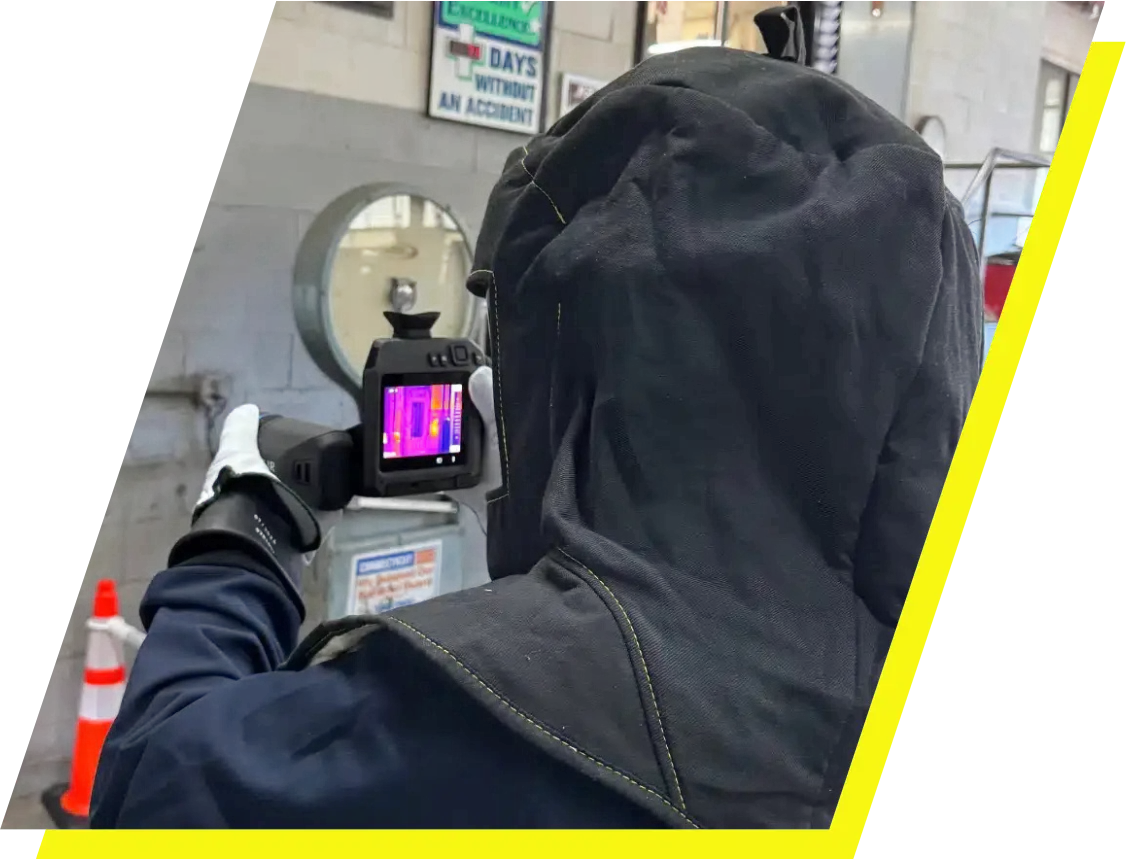
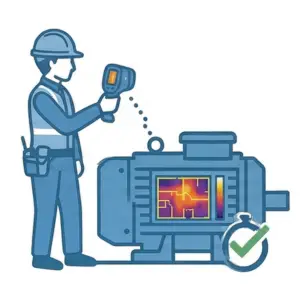
Infrared thermography identifies abnormal heat patterns within electrical equipment that may indicate loose connections, overloaded circuits, phase imbalance, deteriorating components, or failing breakers.
Because heat is often an early warning sign of electrical failure, an IR scan allows issues to be identified and corrected before they lead to equipment damage, downtime, or fire risk.
No. Infrared inspections are performed while equipment is energized and under normal operating load.
This allows us to detect real-world heat signatures without disrupting your facility’s operations. If any shutdown is required for safety or access, we coordinate that in advance.
For most commercial and industrial facilities, infrared inspections should be performed annually as part of a preventive maintenance program.
Facilities with high electrical loads, critical operations, or insurance requirements may benefit from more frequent inspections. Annual IR scanning is widely considered a best practice for reducing risk and documenting due diligence.
Infrared thermography can be used on:
Main switchgear
Distribution panels
Motor control centers (MCCs)
Transformers
Disconnects
Bus duct systems
Electrical terminations
Mechanical systems (as applicable)
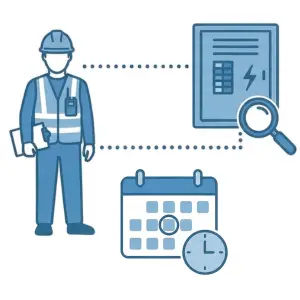
During a site visit, we identify the critical equipment in your facility that should be included in the inspection scope.
After the inspection, you receive a detailed report that includes:
Thermal images
Visual images for reference
Temperature differentials
Severity classification
Clear corrective recommendations
The report is designed to be actionable and easy to understand, helping you prioritize repairs and support documentation for safety audits or insurance providers.
If anomalies are detected, we classify them by severity and provide clear recommendations for corrective action.
Minor issues can often be addressed during routine maintenance windows. Higher-risk findings are prioritized so you can mitigate them before they impact operations.
The goal is not to create disruption — it’s to give you control over when and how repairs are made.
Yes – infrared thermography is widely recognized as a required component of a compliant electrical maintenance program under national safety standards.
NFPA 70B (Standard for Electrical Equipment Maintenance) requires that electrical equipment be maintained in accordance with a documented preventive maintenance program. As of the 2023 edition, NFPA 70B has transitioned from a recommended practice to a formal standard. It specifically identifies infrared thermography as a predictive maintenance method used to evaluate the condition of energized electrical equipment.
Additionally:
NFPA 70E requires employers to protect workers from electrical hazards and implement safe work practices. Identifying overheating components before failure is part of reducing arc flash and fire risk.
Many commercial property insurers reference NFPA 70B and expect periodic infrared inspections as part of risk control requirements.
OSHA’s General Duty Clause requires employers to provide a workplace free from recognized hazards. Overheating electrical equipment is a well-documented recognized hazard.
For most commercial and industrial facilities, annual infrared inspections are considered a standard and defensible best practice for demonstrating due diligence, reducing liability, and maintaining compliance with nationally recognized safety standards.
If you are unsure whether your facility meets current requirements, scheduling a site visit allows us to review your maintenance program and documentation.
Inspection time depends on the size and complexity of the facility. Smaller facilities may require only a few hours, while larger industrial sites may require a full day or multiple days.
During your site visit, we provide a clear scope and timeline so there are no surprises.
To ensure accurate readings:
Equipment should be under normal load conditions
Panels and switchgear should be accessible
Proper safety procedures must be followed
We coordinate with your team in advance to ensure the inspection is efficient and minimally disruptive.
Most electrical failures develop gradually and produce excess heat before failure occurs. By identifying those hot spots early, corrective action can be planned during scheduled maintenance windows rather than reacting to unexpected outages.
This proactive approach significantly reduces the risk of emergency shutdowns and unplanned production loss.
That’s not a problem. While infrared thermography is often the starting point for identifying electrical risks, many facilities benefit from a broader electrical safety and maintenance program.
C&H Electric is a full-service electrical contractor, which means we can support you with a wide range of services beyond infrared inspections, including:
Arc Flash Hazard Assessments
Predictive Maintenance (including infrared thermography)
De-Energized Electrical Maintenance
Electrical Maintenance Programs (EMP)
Electrical Safety Programs (ESP)
NFPA 70E Training
Corrective electrical repairs and upgrades
Many of our clients use infrared inspections as part of a larger preventive maintenance strategy. If issues are identified during an IR scan, our team can help evaluate the findings, prioritize corrective actions, and implement the necessary repairs safely and efficiently.
During your site visit, we can also review your current electrical maintenance and safety programs to determine whether there are additional steps that may help improve safety, compliance, and reliability at your facility.

Not yet ready for a site visit? Contact us directly to learn more.